
Not every online travel agency is the same.
For many hotels, OTAs (online travel agencies) are an essential part of their distribution strategy. Platforms like Expedia and Booking.com introduce travelers to properties they may never have otherwise discovered, helping hotels reach new audiences, fill rooms, and compete in an increasingly crowded market. The commission they earn reflects a clear exchange of value: the OTA created demand, and the hotel gained a guest.
That simple idea leads to a higher standard for hotel distribution: A booking partner should be judged by the value it creates, not simply the bookings it processes.
A Different Booking Model
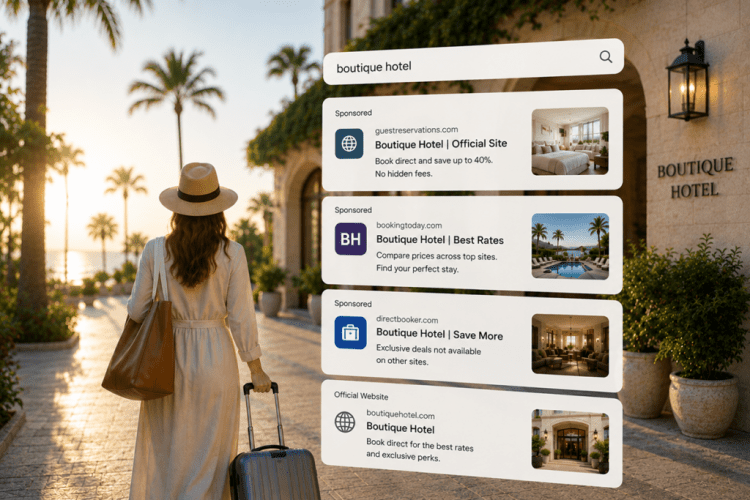
Some booking websites don’t compete to help travelers discover hotels. Instead, they appear after a traveler has already searched for a specific property by name. The traveler has already decided where they want to stay. The only remaining step is completing the reservation.
Rather than introducing a new customer, these websites compete for the booking itself.
The hotel has already invested in its marketing, reputation, guest experience, and brand. It has already earned the traveler’s trust. If another booking website inserts itself between that decision and the hotel’s direct booking path, the commission is no longer paying for discovery. It’s paying for interception.
What Is a Predatory OTA?
A Predatory OTA is a third-party booking website whose primary business model depends on capturing guests who have already chosen a hotel, rather than introducing travelers to hotels they might not otherwise have discovered.
What matters isn’t whether an OTA charges commission. What matters is whether it creates demand or captures demand that already exists.
Healthy hotel distribution depends on partners that expand a hotel’s reach and introduce new travelers. That’s how OTAs have created value for decades.
Predatory OTAs represent a different commercial model. Rather than creating demand, they monetize guest intent that already exists.

Demand Creation vs. Demand Capture
Everything comes back to one question: Did this booking partner create demand, or did it capture demand that already existed?
| Creates Demand | Captures Existing Demand |
| Helps travelers discover new hotels | Primarily appears after a traveler searches for a specific hotel |
| Expands a hotel’s visibility | Competes for guests who have already chosen the property |
| Introduces incremental bookings | Redirects existing booking intent |
| Commission reflects customer acquisition | Commission may be earned on demand the hotel already created |
| Clearly represents itself as a third-party booking partner | May make it difficult for travelers to distinguish between the booking website and the hotel’s official website |
Among the booking websites most commonly associated with this model are GuestReservations.com, ReservationDesk.com, BookOnline.com, HotelsOne.com, and Reservations.com
Not Every Booking Tells the Same Story
When hotels review their booking mix, every reservation can look the same.
A guest arrives. A room is occupied. Revenue is recognized. But not every booking reaches the hotel the same way.
Some reservations exist because a distribution partner introduced a traveler to a hotel they may never have otherwise discovered. Others come from travelers who had already chosen the hotel before another booking website entered the journey.
Both result in a reservation. They don’t represent the same value. Recognizing that difference helps hotels better understand which partnerships are expanding their business—and which are simply changing the path a booking takes.
Raising the Standard
The hospitality industry benefits from strong distribution partners. Hotels should continue investing in relationships that introduce new travelers, open new markets, and create measurable value.
The industry should also expect greater transparency. Travelers deserve to know who they’re booking with, and hotels deserve to understand where their bookings originate. Every booking partner should be able to answer a simple question: What value did you create before this guest made their reservation? That’s a higher standard for hotel distribution. One that rewards value creation and helps hotels protect the guest intent they’ve already earned.
Find Out If It’s Happening to Your Hotel
Many hotels don’t realize third-party booking sites are advertising against their brand until they see it for themselves. Get a complimentary assessment and discover how your hotel appears in search.


