
Understanding predatory OTAs, OTA brand hijacking, and the hidden cost of diverted bookings.
Imagine you’ve already chosen your hotel. You’ve compared locations, read the reviews, looked through the photos, and decided where you want to stay. The decision is made. All that’s left is booking your room.
You search for the hotel’s name, expecting one final click before your reservation is complete. Instead, you enter one of the most competitive advertising auctions on the internet. Within seconds, multiple companies are competing for your booking. Some helped you discover the hotel in the first place. Others are competing for a traveler who has already made their decision.
Most guests never notice the difference. They click what appears to be the right booking link, complete their reservation, and assume they’ve booked directly with the hotel.
Weeks later, the hotel receives an OTA reservation. The guest arrives as expected, the stay goes ahead, and everything appears normal. The only thing that changed was the path the booking took to get there.
How the Booking Changes
What happens next determines who ultimately owns the booking.
After a traveler searches for a hotel’s name, Google runs an advertising auction to determine which sponsored results appear first. Hotels can bid on their own brand names, but so can online travel agencies and other third-party booking websites.
While the auction happens in milliseconds, the commercial outcome can be significant. Not every advertiser is competing to introduce a traveler to a hotel. Some are competing for a traveler who has already made that decision.
Traditional OTAs help travelers discover hotels they may not have otherwise found. Predatory OTAs compete for travelers who have already chosen where they want to stay. One model creates demand. The other competes for demand that already exists.
What is a Predatory OTA?
A Predatory OTA is a third-party booking website whose primary business model depends on capturing guests who have already chosen a hotel, rather than introducing travelers to hotels they might not otherwise have discovered.
In other words, the traveler has already made their decision. The booking website isn’t helping them discover where to stay—it’s competing to become the path they use to complete their reservation.

What Your Guests Actually See
The easiest way to understand how Predatory OTAs work is to look at the booking journey from the guest’s perspective.
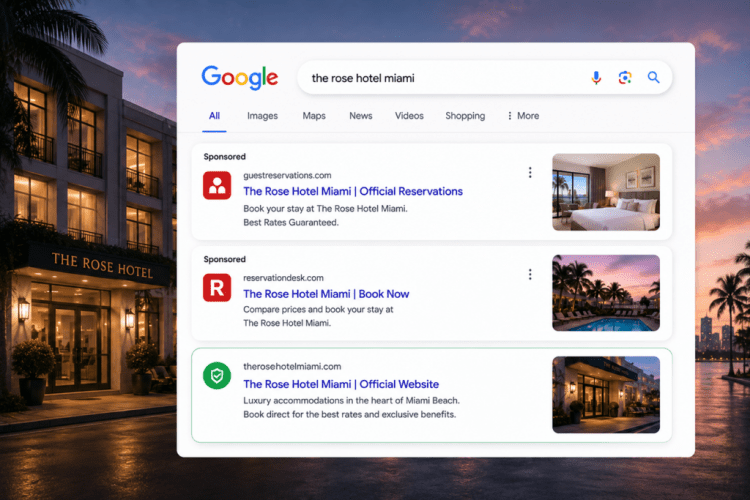
Imagine you’ve already decided to stay at a hotel. You search for its name, expecting to find the official website. Instead, you’re presented with multiple booking options that all appear to lead to the same destination.
At first glance, nothing looks unusual. The hotel name is prominent, availability is highlighted, and the advertisement appears to be another way to book the property.
Look a little closer… The booking path isn’t the hotel’s website. It’s a third-party booking site competing for a traveler who has already chosen where they want to stay.
Competing for Guest Intent
Booking websites such as GuestReservations.com, ReservationDesk.com, HotelsOne.com, BookOnline.com, and Reservations.com frequently appear in branded hotel searches alongside official hotel websites.
Their advertisements often feature the hotel’s name, photos, address, and booking-related language designed to appeal to travelers who are ready to reserve a room. In many cases, the only meaningful difference is the website the guest clicks.
For a traveler booking quickly, the difference isn’t always obvious. By the time the reservation reaches the hotel, the guest may have no idea they booked through a third party.
When Guests Think They Booked Direct
For many travelers, the booking experience feels completely normal. They search for a hotel, select what appears to be the correct booking option, complete their reservation, and assume they’re dealing directly with the property.
The difference often isn’t discovered until something changes.
A guest wants to modify their reservation. They request a refund. They call the hotel expecting assistance, only to learn the booking was made through a third-party website rather than the hotel’s official booking channel.
By then, the booking path matters.

The Same Room. A Different Booking.
The comparison above shows two reservations for the same hotel, the same room, and the same stay dates. The guest experience at the hotel may be identical. The booking experience is not.
Depending on the booking channel, travelers may encounter additional service fees, different cancellation policies, or customer support that operates independently from the hotel. At the same time, the hotel may pay commission on a reservation that began with a traveler who had already decided where they wanted to stay.
The room hasn’t changed. The stay hasn’t changed. Only the path to the reservation has.
Why Hotels Rarely See It
By the time a reservation reaches the hotel, very little suggests anything unusual happened.
The booking appears as another OTA reservation. The guest arrives, checks in, and the stay proceeds as expected. Unless a guest mentions how they booked, or encounters a problem before arrival, there’s often no indication that they originally intended to book directly.
That’s what makes Brand Hijacking so difficult to identify. Most booking reports show where a reservation came from. They rarely explain how the traveler got there. Without visibility into the booking journey, hotels are left measuring the outcome rather than understanding the path that produced it.
From The Modern Hotelier podcast, Operto CEO Tim Major explains how AI is creating new opportunities to identify and address the growing challenge of predatory OTAs.
Seeing the Booking Journey Clearly
Hotels have spent years investing in the moment a traveler chooses their property. Increasingly, they also need visibility into what happens after that decision has been made.
Understanding who appears alongside your hotel in branded search results, how guests reach your booking engine, and where booking paths change is becoming an important part of protecting direct bookings.
Before hotels can address Brand Hijacking, they first need to see it.
Curious how much revenue could be at risk?
Use our free Predatory OTA ROI Calculator to estimate how much direct booking revenue may be leaking through third-party booking channels. Or, get a complimentary assessment and see who’s bidding on your hotel in just 5 minutes.


