
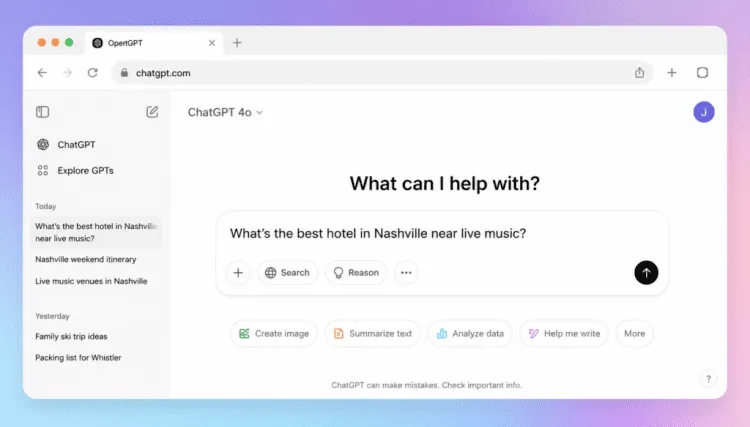
Most hotels have a good understanding of their visibility in traditional search. They know where they rank on Google. They monitor website traffic, direct bookings, review scores, and other metrics that help measure performance online.
But as travelers increasingly use tools like ChatGPT, Gemini, and Perplexity to research destinations and compare accommodations, a new visibility challenge is emerging.
Do you know whether your hotel is being recommended by AI?
For many operators, the answer is no. That is not surprising. Until recently, there was no reason to ask the question. Search engines returned a list of links, and success was measured by rankings, clicks, and conversions.
AI has changed that model.
Instead of returning pages of results, AI platforms increasingly attempt to answer questions directly. When a traveler asks for recommendations, AI is not simply looking for hotels nearby. It is trying to determine which properties best match the traveler’s needs and explain why.
That shift creates an important distinction. Being found and being recommended are no longer the same thing.
The way travelers search is changing
Consider the difference between a traditional search and an AI prompt.
A traveler using Google might search for:
Hotels in downtown Nashville.
A traveler using ChatGPT might ask:
What is the best boutique hotel in Nashville for a weekend focused on live music and local restaurants?
The first query produces a list of options. The second asks for a recommendation.
To answer that question, AI needs to understand far more than your hotel’s name and location. It needs to understand the experience you offer, who your property is best suited for, and what makes it different from the alternatives.
This is why visibility in AI is becoming a different challenge than visibility in search.
Most hotels have never tested how AI sees them
One of the simplest exercises a hotel can run today is to ask AI about its own property.
Open ChatGPT and ask:
- What type of hotel is [Hotel Name]?
- Who is this hotel best suited for?
- What are the best hotels in [destination] for [your ideal guest]?
The answers are often revealing. Some hotels discover that AI describes them accurately and highlights the experiences they want to be known for. Others find that important amenities are missing, competitors are being recommended instead, or the property is being positioned in a way that does not reflect reality.
This happens because AI systems build their understanding from information gathered across websites, OTA listings, reviews, business profiles, travel publications, and other sources.
If those signals are incomplete, inconsistent, or unclear, AI may struggle to understand where your hotel fits.
Before thinking about AI visibility, define who you want to attract
When hotels begin thinking about AI visibility, the conversation often jumps straight to tactics. Schema markup, content optimization, review management, and local citations all play an important role, but they only work when they are reinforcing a clear story.
Before investing in optimization, hotels should answer a more fundamental question: Who do we want AI to recommend our hotel to?
Once that answer is clear, it becomes much easier to identify the traveler questions you want to appear in and the signals that need to be strengthened to support those recommendations.
The traveler prompt test
Once you have identified your ideal guest, the next step is understanding how they search. More specifically, what questions would they ask an AI platform when planning a trip?
Those questions are often very different from the keywords hotels have traditionally optimized for. Rather than searching “hotels in Whistler“, a traveler might ask for the best family friendly ski resort with activities for children. Instead of searching “downtown Nashville hotels“, they might ask where to stay for a weekend focused on live music and local restaurants.
This shift from keywords to prompts creates a useful exercise for hotels.
Start by listing the types of travelers you want to attract, then think about the questions they would naturally ask.
A business traveler might ask:
- What is the best hotel for a business trip in downtown Chicago?
- Which hotels near the convention center have great workspaces?
A family planning a ski vacation might ask:
- What is the best family friendly ski resort in Whistler?
- Which ski resorts have activities for young children?
A wellness traveler might ask:
- Where should I stay for a relaxing wellness weekend?
- What are the best boutique hotels with spa experiences?
Once you have a list of relevant prompts, test them in ChatGPT, Gemini, or another AI platform.
Does your hotel appear?
If it does, how is it described? Are the experiences and attributes that make your property unique being highlighted? Does the recommendation align with how you want to be positioned?
If it does not appear, which hotels are being recommended instead? What characteristics do those properties share? What signals might AI be using to connect them to the traveler intent behind the prompt?
The goal is not to obsess over individual results. AI recommendations will continue to evolve. The goal is to understand whether AI currently associates your property with the travelers you are trying to attract.
What should you do if AI gets your hotel wrong?
The traveler prompt test often reveals gaps between how a hotel sees itself and how AI platforms understand it.
Perhaps your hotel is not appearing in the recommendations you expected. Maybe AI is emphasizing amenities that are not central to your positioning. In some cases, competitors are showing up for traveler segments you believe you serve better.
When that happens, the answer is not to chase individual prompts. The goal is to strengthen the signals that help AI understand who your property is, who it serves, and what makes it unique.
This may include refining website messaging, improving OTA descriptions, ensuring information is consistent across channels, encouraging more detailed guest reviews, or strengthening your presence on trusted third party sites.
The tactics will vary from property to property, but the objective remains the same: make it easier for AI to confidently connect your hotel to the travelers you want to attract.
A new way to think about hotel visibility
For years, hotel marketers focused on a familiar question:
How do we rank higher?
As AI becomes part of the travel planning journey, a new question is beginning to matter just as much:
If a traveler asks AI for a hotel recommendation, will we be part of the answer?
That shift requires a different way of thinking about visibility. Instead of focusing only on rankings and keywords, hotels need to understand the traveler questions they want to be associated with and whether AI platforms currently connect their property to those experiences.
The most successful hotels will not necessarily be the ones that appear in every recommendation. They will be the ones that consistently show up for the travelers they are best equipped to serve.
That starts with understanding how AI sees your hotel today, how it describes your property, and whether it associates your brand with the experiences you want to be known for.
Because before you can improve your visibility in AI, you need to understand the story AI is already telling about your hotel.


